The brushed DC motor have been around for a long time, and its use
can be traced back to the 1830s. They can be found just about anywhere.
In toys, household appliances, computer cooling fans, you name it. As
one of the simplest motors to construct and control, it is no wonder
that the brushed DC motor still remains as a favorite among
professionals and hobbyists alike.
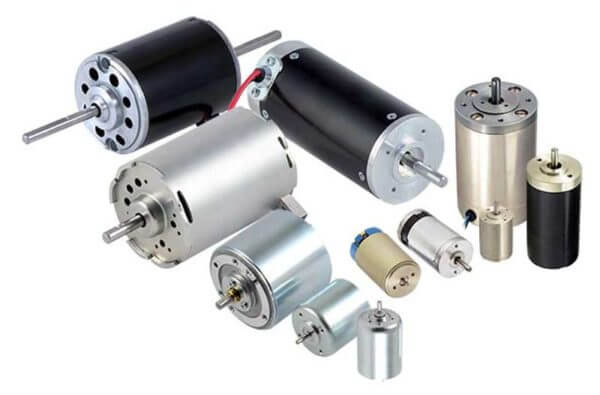
Brushed DC motors come in different sizes (Source: Alliedmotion)
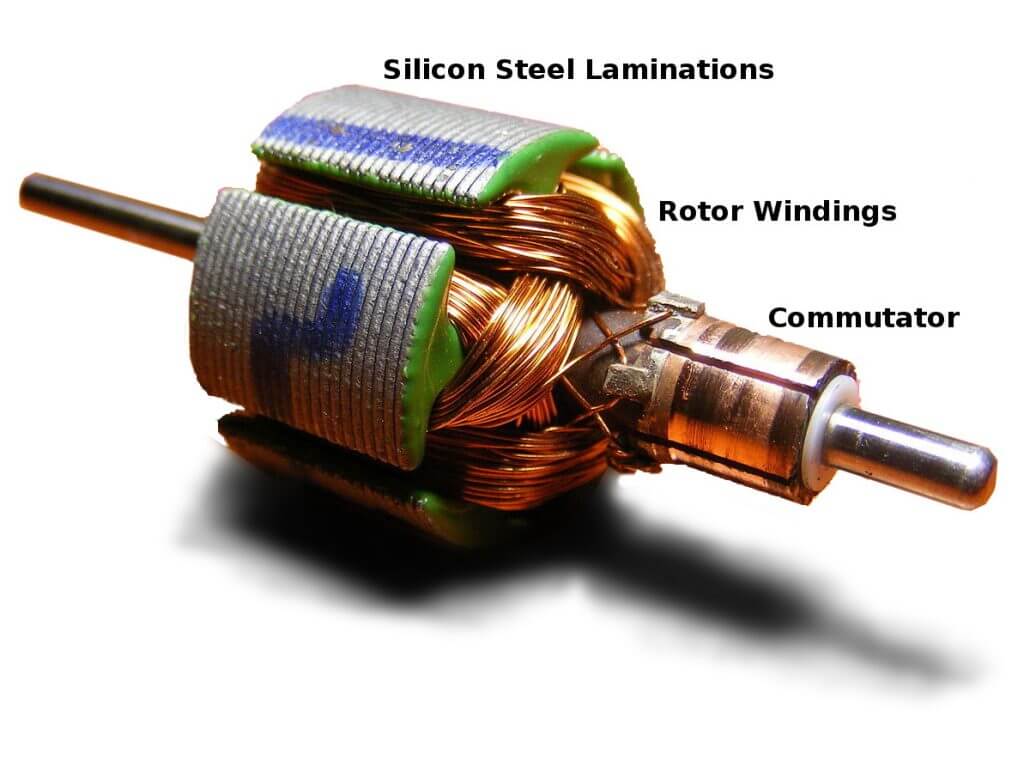
Brushed motor interior
Why are they called brushed motors? The current is provided via two
stationary metallic brushes that make contact with the different
segments on the ring. As the commutator rotates, the brushes make
contact with the next segment and therefore continue the rotation of the
motor. As you can imagine, this generates friction and so heat and even
sparks are generated.
Working Principle:
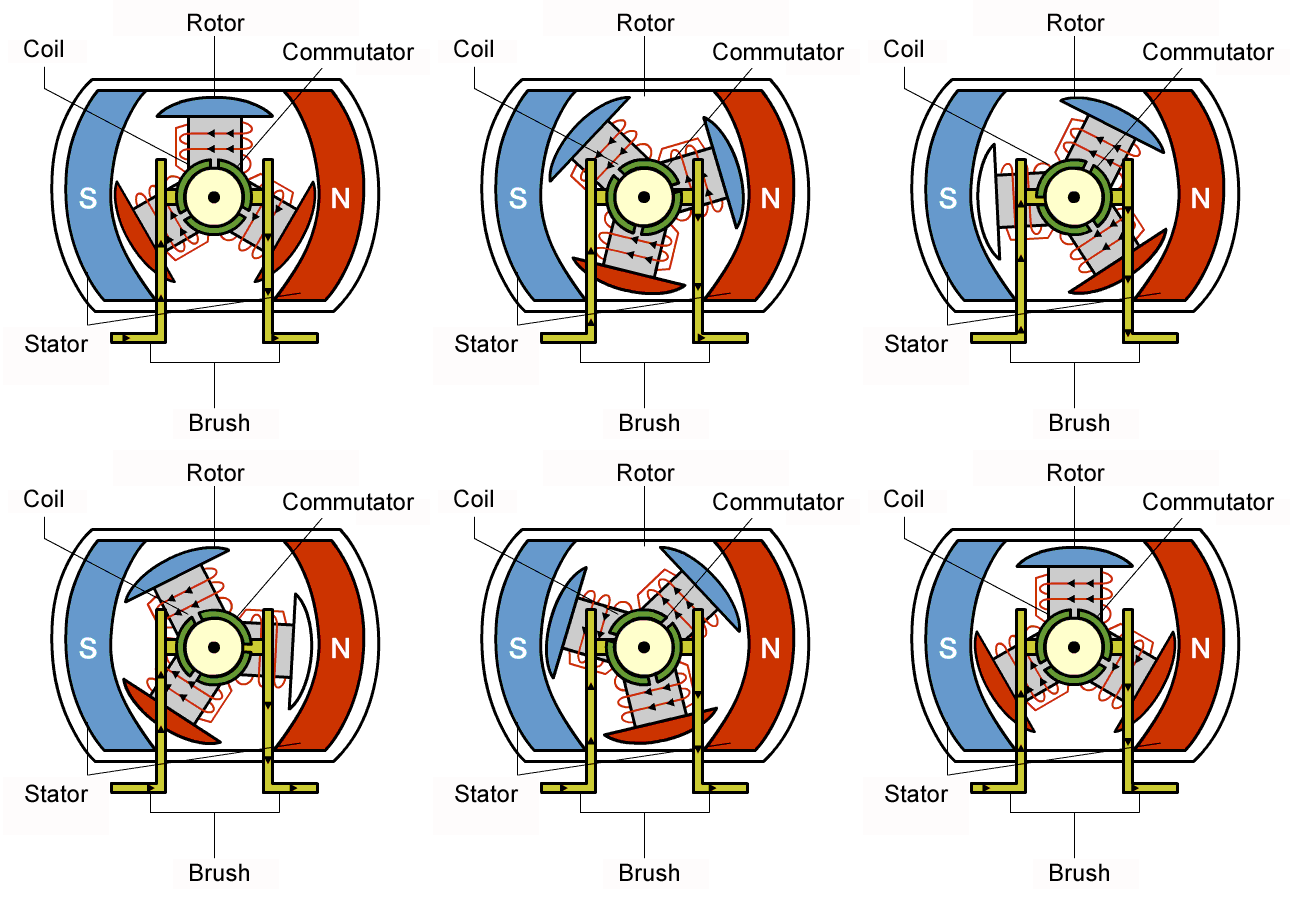
An operating Brushed DC motor (Source: Renesas)
How does a DC motor move? DC motors consist of coils connected to
segments of a ring, or commutator. The coils are surrounded by a pair of
magnets, or a stator, that envelopes the coils in an electric field. If
you remember from your physics classes, when current is passed through a
wire in a magnetic field, the wire experiences a force, and so the
coils in the motor experience a force that pushes the coil and begins
the rotation. The GIF illustrates the working principle of the brushed
motor. The coil experiences a downward force when it reaches the area on
the right, and an upward force when it reaches the area on the left. By
adding multiple coils attached to different segments on the commutator,
steady rotation can be maintained. The direction of rotation can be
reversed simply by reversing the polarity on the motor’s contacts.
Advantages & Limitations:
Advantages
Simple to control
Controlling a brushed DC motor is as simple as a switch. Simply apply
a voltage to start driving them. They slow down when the voltage is
lowered, and spin in the other direction when the voltage is reversed.
Excellent torque at low speeds
High torque is achieved at low speeds.
Reasonably Efficient
Brushed DC motors are about 75-80% efficient.
Inexpensive
A typical brushed DC motor at the Seeed Bazaar costs only $2.55.
Limitations
Noise
Aside from the audible noise from the rubbing parts, electromagnetic
noise is also generated as a result of the strong sparks that occur at
areas where the brushes pass over the gaps in the commutator. This can
potentially cause interference in other parts of the system.
Constant Maintenance
Brushes could get easily worn out as a result of continuous moving
contact and require constant maintenance. Speed could be limited due to
brush heating.
Applications:
Nowadays, some might claim that the brushed DC motors are no longer
relevant as the brushless dc motor has displaced it from many applications.
However, that is definitely not the case. Brushed motors can still be
the best solution for many industrial applications that require constant
torque across the motor’s entire speed range. Uses include mobile phone
vibrators, toys, handheld fans, cordless drills and car windows among
many things. Depending on the needs of your application, the brushed DC
motor might be the more suitable option. If a simple control scheme and
low cost is your primary concern, consider the use of a brushed DC
motor.
If you have any problem in choosing stepper motor such as pancake stepper motor, you can contact us at any time.
Comments
Post a Comment